


What Prefab Container Homes Really Cost in 2026
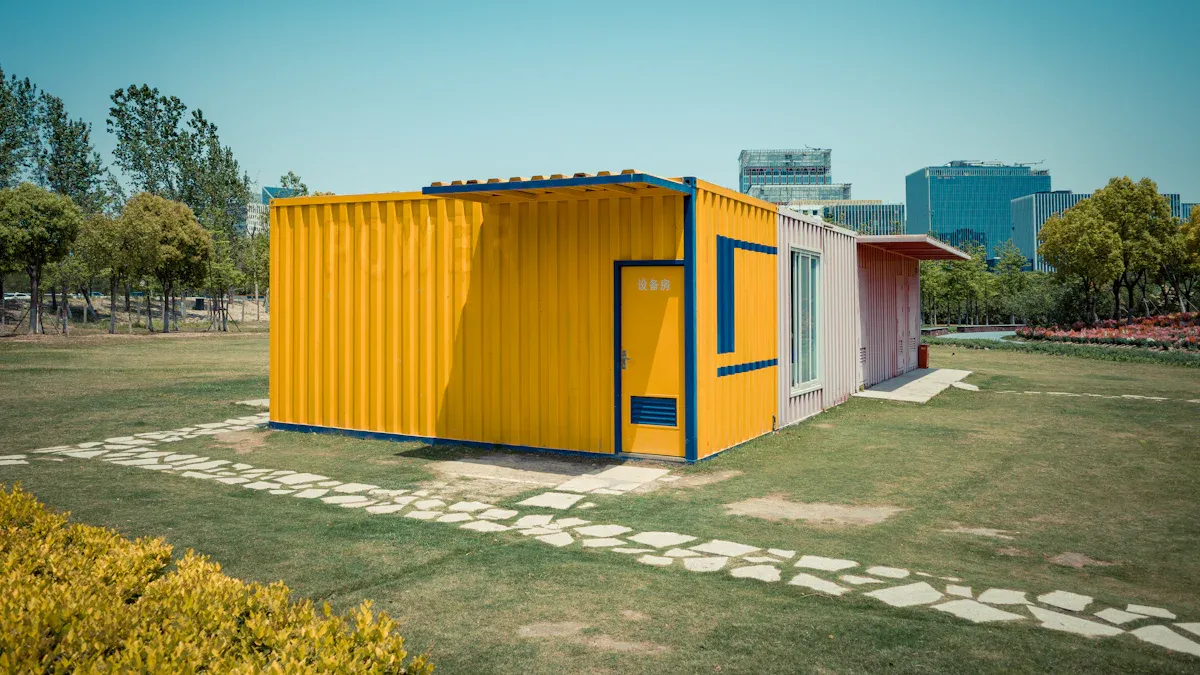
Image Source: statics.mylandingpages.co In 2026, Prefab Container Homes cost $25,000 to $250,000 all-in. Most professionally finished single-container homes land between $100,000 and $175,000 installed. The container shell represents only 10–20% of the total project budget. Homeowners pay $150–$350 per square foot for a Prefab Container Home
26-09-18

In 2026, Prefab Container Homes cost $25,000 to $250,000 all-in. Most professionally finished single-container homes land between $100,000 and $175,000 installed. The container shell represents only 10–20% of the total project budget. Homeowners pay $150–$350 per square foot for a Prefab Container Home. Financing rates range from 7% to 12%.
Key Takeaways
- Prefab container homes cost between $25,000 and $250,000 in 2026, with most single-container homes priced from $100,000 to $175,000.
- The container shell is only 10–20% of the total cost. You must budget for site work, foundations, utilities, and finishing.
- You can finance a container home with mortgages, construction loans, or personal loans. A permanent foundation and certificate of occupancy help you qualify.
Prefab Container Home Cost Breakdown in 2026

A complete cost breakdown for prefab container homes starts with the shell. The container itself represents a small fraction of the total container home cost. Buyers must account for delivery, modifications, and site work. Each component adds to the final price.
Base Container Cost: New vs. Used
A used shipping container typically costs $2,000 to $5,000. A new one-inch steel container commands $4,000 to $8,000. These basic single unit costs seem low. However, the average cost of a container house rises quickly after modifications. Factory-built modules for a prefab container house carry higher pricing. The table below shows module costs for three configurations.
| Configuration | Low end | Midpoint | High end |
|---|---|---|---|
| Single 20-Foot Conversion (160 sq ft) — Module (factory) | $18,000 | $24,000 | $32,000 |
| Two-Module 40-Foot Expandable (640 sq ft) — Module (factory) | $38,000 | $52,000 | $68,000 |
| Multi-Module 800 Sq Ft Home — Module (factory) | $58,000 | $78,000 | $105,000 |

Delivery, Modification, and Transport Fees
Transport fees vary by distance and module size. A single container module traveling 500 miles costs $5,000 to $8,500. A double-module move over 1,000 miles reaches $12,000 to $18,000. Oversized loads require permits and pilot cars. Modification costs include windows from $400 each, doors at $500 to $2,000 per unit, and HVAC systems at $2,000 to $10,000. Electrical work runs $2 to $4 per square foot. Plumbing adds $4 to $6 per square foot. A homeowner building shipping container homes must set aside a healthy budget for these line items. The average cost of a container house reflects all these expenses combined.
The Complete Guide to Container Home Cost Components
Prefab container homes involve more than the module purchase amount. Several cost categories determine the final number. These components include:
- Module (factory): $18,000 – $105,000 depending on home size
- Site prep: $3,000 – $22,000
- Foundation: $2,500 – $26,000
- Transportation: $4,500 – $22,000
- Crane and setting: $1,500 – $22,000
- Utility hookup: $8,000 – $50,000
These six categories combine for an all-in total of $37,500 to $247,000 across the three configurations. Each category deserves close examination.
Site Preparation and Foundation Expenses
Site preparation and foundation work often surprise new owners. The ground beneath a container requires careful preparation. This work includes clearing brush, grading for water drainage, spreading a compacted base, and installing the foundation system. Concrete piers or helical screw piles are common options.
| Expense Category | Condition / Type | Low End | High End |
|---|---|---|---|
| Site Preparation | Flat, accessible lot | $3,000 | $10,000 |
| Site Preparation | Sloped, wooded lot, or new driveway required | +$5,000 | +$25,000 |
| Foundation | Concrete piers (single module) | $2,500 | $6,000 |
| Foundation | Full poured slab | $8,000 | $18,000 |
| Foundation | Crawlspace | Between piers and slab | Between piers and slab |
Site work covers clearing, grading, soil compaction testing, and access roads. The main driver is whether heavy equipment and a delivery crane can reach the site. Raw acreage with mature trees and a long approach pushes site prep expenses high enough to match the module expense. Concrete piers are the cheapest legal option for foundations. A permanent foundation meeting HUD's Permanent Foundation Guide is required for the home to qualify as real property and conventional mortgage financing.

This chart illustrates the wide range between low and high end scenarios. The average cost of a container house rises significantly on difficult sites. A flat lot with concrete piers keeps a prefab container house at the lower end of the price spectrum.
Utility Connections, Permits, and Inspections
Utility connections represent the largest variable expense in any container project. Connecting water, sewer, and power requires coordination with local utilities. Permits and inspections add another layer of expense.
| Expense Category | Estimated Range (2026) | Notes |
|---|---|---|
| Municipal impact fees (new residence) | $3,000 – $14,000 | Varies by jurisdiction |
| Utility connection charges (physical hookup) | $2,500 – $18,000 | Depends on distance to main line |
| Post-installation permits & inspections | $600 – $2,400 | Typical across most US jurisdictions |
| Utility hookups (combined) | $8,000 – $35,000 | Highest for well/septic on rural land |
| Permits + engineering (combined) | $2,500 – $12,000 | Local jurisdiction sets the floor |
These numbers highlight why buyers must research local fees early in the process. A remote property with well and septic systems pushes utility expenses to the high end. Buyers seeking financing for container homes must account for these expenses. Lenders require proof of utility access before approving loans. This step is critical for anyone pursuing financing for container homes for the first time. Understanding utility expenses helps buyers secure financing for container homes with confidence.
Interior Finishing and Labor
The factory-finished module arrives with basic interior work complete. Additional finishing touches add further expense. Interior elements include flooring, cabinetry, countertops, lighting fixtures, and paint. Labor rates vary by region. Skilled trades charge $50 to $150 per hour depending on the market. A complete interior finish for a single container module runs $15,000 to $40,000. This figure covers standard materials. Upgraded finishes push the total higher.
Buyers should note that the average cost of a container house includes these interior expenses for the home. Basic single unit costs for materials are lower, but these projects require the same labor intensity as larger builds. Shipping container homes require specialized knowledge for insulation and electrical work within steel walls. This expertise commands a premium. Anyone planning a budget should set aside 20 percent of the module expense for interior finishing.
These six expense categories form the complete financial picture for a prefab container house. Understanding each category allows buyers to compare quotes accurately.
Factors That Affect Your Container Home Cost
Size and Number of Containers
Size directly determines the project scale. A single 40-foot unit provides roughly 320 square feet. Adding modules expands the floor plan but multiplies expenses. A single-unit configuration keeps the price manageable. A multi-unit design pushes the average cost of a container house significantly higher. Anyone planning a prefab container house should start with a single unit to control the budget. The table below illustrates typical budgets for different configurations.
| Build Type | Total Cost |
|---|---|
| Single-unit (budget DIY) | $20,000 – $40,000 |
| Single-unit (mid-range contracted) | $80,000 – $140,000 |
| Two-unit build | $120,000 – $200,000 |
| Luxury / multi-unit (3+) | $200,000 – $300,000+ |
The cost per square foot for shipping container homes ranges from $100 to $250 for standard finishes. The price increases with each additional unit.
Location and Local Labor Rates
Location affects both land costs and labor expenses. Remote properties often require higher transport fees and site preparation work. Local labor rates vary by region. Dealers frequently offer preferred site prep partners. These partners typically carry a 25–40% markup over the local market rate. Obtaining independent quotes for site prep, grading, foundation, and drilling avoids this markup and keeps costs aligned with actual local labor rates. This approach reduces the overall pricing and prevents unnecessary expenses.
Design Complexity and Material Choices
Design complexity and material selections heavily influence the final cost. A simple single-unit home with standard finishes remains affordable. Multi-unit structures with floor-to-ceiling windows and custom cabinetry drive costs upward. Each cut into the steel for windows and doors increases labor expenses. Sustainable materials like recycled wood and solar panels raise upfront costs. These choices provide long-term savings through lower energy bills. Custom designs for a prefab container house with unique features can cost 30% more. The average cost of a container house reflects these material and design decisions.
Hidden Costs in Prefab Container Homes
Every prefab container house carries expenses beyond the base module price. These hidden costs often surprise first-time home buyers. Understanding them prevents budget overruns and ensures a realistic financial plan.
Rust, Structural Reinforcement, and Repairs
Steel containers require ongoing maintenance. Rust repair costs reach approximately $7,000. Structural reinforcement adds $2,000 to $5,000 for single-story builds. Multi-story projects require $10,000 or more for reinforcement. Future foundation repairs add $5,000 to $15,000.
| Hidden Cost Category | Description |
|---|---|
| Maintenance Costs | Roof repairs, electrical upgrades, and HVAC upkeep add ongoing expenses. |
| Material Quality & Long-Term Repair | Steel frame thickness and anti-rust treatment affect durability and future repair costs. |
| Maintenance & Lifecycle Costs | Sealant inspection, anti-rust maintenance, and roof drainage checks create recurring costs. |
These expenses raise the average cost of a container house significantly. A home buyer must account for them early in the planning process.
Compliance, Engineering, and Architect Fees
Building codes require engineering stamps and architect approvals for prefab container homes. Local jurisdictions demand structural calculations for modified units. These fees range from $2,500 to $12,000. Permits add another $600 to $2,400. Project delay costs arise from late layout confirmation or unprepared sites. These delays increase both time and expense.
The average cost of a container house must include these compliance expenses. A home needs proper engineering to meet code requirements.
Land Access, Crane Rental, and Shipping Surcharges
Site access determines transport feasibility. A flatbed truck requires a minimum 12-foot width clearance. Crane rental covers initial container placement. Remote locations increase transport costs. Traditional units require heavy cranes and specialized equipment.
| Cost Item | Details |
|---|---|
| Land access | Not included in base price |
| Crane rental for installation | Not included in base price |
| Shipping surcharge – Midwest | Additional $1,500–$3,000 |
| Shipping surcharge – Northeast | Additional $2,000–$4,000 |
Remote sites require additional transport planning. A buyer planning a prefab container house must verify regional container delivery fees before committing to a contract. The final price includes all transport-related expenses.
Container Homes vs. Traditional Construction: Cost Comparison
Cost per Square Foot Side-by-Side
Traditional construction costs $150 to $400 per square foot in 2026. Container homes range from $125 to $350 per square foot. The container home price sits lower for standard builds. A traditional home often exceeds the container home cost at the upper end. The table below compares these two options directly.
| Build Type | Low End | High End |
|---|---|---|
| Traditional Construction | $150/sq ft | $400/sq ft |
| Container Home | $125/sq ft | $350/sq ft |
Where Container Homes Offer Savings
Prefab container homes deliver several financial benefits over traditional builds. The table below outlines these advantages.
| Cost Saving Area | Evidence |
|---|---|
| Reduced Labor Costs | Off-site construction can reduce labor costs by up to 20% compared to traditional homes, per the National Association of Home Builders. |
| Shorter Construction Duration | Prefab construction typically reduces the construction period by 25-50%, with assembly in days versus months for traditional homes. |
| Lower Material Waste | Modular construction can reduce waste by up to 90% compared to traditional methods, according to the U.S. Department of Energy. |
| Lower Upfront Costs | Prefab container houses often have lower upfront costs due to efficient use of materials and labor. |
| NYC Case Study | In a New York project, prefab structures were 50% cheaper and 75% faster to build than traditional homes. |
| Tokyo Case Study | In Tokyo, prefab container houses reduced costs by 25% and construction time by 40% compared to traditional homes. |
These benefits make container homes a cost-effective choice for many buyers. The sustainability advantages also appeal to environmentally conscious homeowners. A container home investment supports cost efficiency and long-term value.
Where Container Homes Require Higher Spending
Container homes carry higher expenses in specific areas compared to traditional construction.
- Transportation logistics: Moving containers, especially oversized 40-foot units, can cost thousands of dollars, with additional expenses for crane access and special permits for remote sites.
- Foundation engineering: Requires professional engineering to ensure adequate load-bearing and frost protection, which adds cost compared to simpler traditional foundations.
- Site preparation: Costs vary enormously based on terrain, access, and local conditions, potentially exceeding traditional construction in difficult sites.
- Utility connections: Connecting to electrical, water, and sewer systems requires coordination with utilities and licensed tradespeople, adding complexity and expense.
- Permitting and inspection: In areas with stringent building codes, these processes can add time and cost regardless of construction method.
A realistic budget must account for these higher spending categories. The sustainability benefits remain strong, but buyers should plan for these container-specific expenses.
Container Home Financing Options in 2026
Securing funds for a container home requires a different approach than a standard home purchase. Lenders view these structures as nontraditional construction. This classification shapes every part of the borrowing process. Buyers who understand the available container home financing paths save time and avoid rejected applications. The right strategy depends on the project stage, the borrower's credit profile, and the home's final classification.
Financing a Shipping Container Home: Loans and Lenders
The lending market for container homes has matured considerably. Banks, credit unions, online lenders, and government-backed programs now offer products for qualified borrowers. Each option carries distinct terms and requirements. The table below outlines the main types of shipping container home loans available in 2026.
| Loan Type | Description | Lender Sources |
|---|---|---|
| Traditional Mortgage | Requires container home on permanent foundation with utility hookups to classify as real estate. | Traditional banks |
| Personal Loan | Unsecured loan usable for various purposes including home renovations and unexpected expenses. | Various lenders |
| Specialized Container Home Loans | Designed specifically for container homes; terms vary by lender. | Various lenders |
| Construction Loans | Short-term loans covering construction costs from start to finish. | Traditional banks |
| Home Equity Loan | Borrow funds using accumulated home equity as security. | Traditional banks |
| FHA Loans | Mortgage loans insured by the Federal Housing Administration; reduced down payment for first-time buyers or income-restricted applicants. | Government-backed lenders |
| VA Loans | Mortgage loans guaranteed by the U.S. Department of Veterans Affairs; no down payment, no mortgage insurance, lenient credit for eligible service members, veterans, and surviving spouses. | Government-backed lenders |
Conventional mortgages treat a finished container home much like a stick-built house. The lender requires permanent installation on owned land. Construction loans cover the build from the ground up and convert to a traditional mortgage after completion. These products demand detailed plans, a licensed builder contract, good credit, permits, land ownership, and a realistic timeline. Personal loans offer speed and flexibility. Borrowers can use them for almost any purpose, including building or buying a container home. Specialized lenders recognize the non-conventional nature of these structures and design products around them. Home equity loans and HELOCs let owners tap existing equity to fund construction. FHA and VA loans remain available for eligible buyers when the property meets criteria such as a permanent foundation and local code compliance. Some manufacturers and builders also offer in-house financing or lender partnerships. These turnkey arrangements simplify the purchase for buyers who want a single point of contact.
Interest rates in 2026 vary widely by product. The table below shows representative terms for common loan products.
| Loan Product / Lender | Interest Rate (APR) | Loan Amount | Term |
|---|---|---|---|
| Personal loans (general) | 7.99%–15.99% | $5,000–$100,000 | Not specified |
| LightStream (SunTrust) | 7.99%–14.99% | $5,000–$100,000 | 24–84 months |
| SoFi Personal Loans | 8.99%–15.99% | $5,000–$100,000 | 24–84 months |
| Local credit unions | As low as 6–10% | Not specified | Not specified |
| PayPal Credit | 0% for 6 months (promotional) | Purchases over $99 | 6 months no interest |
| Estimated monthly payment example (8.99% APR) | 8.99% | $7,995–$24,995 | 60–84 months |
Short-term bridge products serve a different borrower profile. Fix and flip loan rates for container homes typically run 10–13% in 2026. Lenders cover up to 90% of total project cost and cap leverage near 70% of after-repair value. Typical terms run 12–18 months with interest-only payments. No-money-down structures can cover up to 100% of cost with the same 12–18 month terms. Standard hard money bridge loans close in 10–15 days with 90% LTC and 70% ARV. DSCR refinance exit options offer 30-year amortized terms based on rental income. These products suit investors and buyers who need speed over low rates.
Cash, Owner Financing, and Equity Options
Not every buyer relies on a bank. Cash purchases eliminate interest charges and closing costs. This path gives the owner full control over the build schedule and design choices. The tradeoff is opportunity cost. Tying up capital in a container home removes funds from other investments. Buyers who pay cash also lose the tax deductions tied to mortgage interest.
Owner financing offers another route. In this arrangement, the seller or builder extends credit directly to the buyer. Terms are negotiable and often more flexible than bank requirements. This option works well when the buyer has steady income but imperfect credit. The risk lies in default provisions and unclear contracts. Both parties should engage a real estate attorney to document the agreement.
Equity options let existing homeowners fund a container project without new debt. A home equity loan provides a lump sum with fixed payments. A HELOC works like a credit card with a revolving limit. Both use the borrower's primary residence as collateral. These products typically carry lower rates than personal loans. The borrower must have sufficient usable equity to qualify. Lenders generally cap total debt at 80–85% of the home's appraised value. A borrower with substantial equity can fund an entire container build this way. This approach keeps the new structure free of a separate mortgage. It also preserves the option to refinance later.
Lender Requirements Unique to Container Homes
Container homes are classified as nontraditional construction. Lenders treat them more cautiously than traditional homes. The main concerns include nontraditional construction methods, limited comparable home sales, questions about long-term resale value, inconsistent appraisal standards, and varying local building regulations. Financing is possible but often requires a more strategic approach than a standard home purchase.
Lenders impose specific requirements before approving a container home loan. These conditions protect the lender's collateral and ensure the home qualifies as real property.
- Permanent foundation
- Full utility connections
- Certificate of occupancy
- Compliance with local residential codes
- Professional engineering and permits
- Comparable home sales in the area
- Insurability of the finished home
- Zoning approval and access to utilities
- Appraisal feasibility
Credit score thresholds determine approval odds and pricing. The table below shows the ranges lenders use in 2026.
| Requirement | Threshold |
|---|---|
| Credit score for improved approval odds | 680+ |
| Credit score for better rates | 700+ |
| Credit score for strongest loan options | 720+ |
| Construction loan down payment | 20–25% |
| Personal loan down payment | Little or none |
The home's classification drives which loans remain available. The table below compares three categories.
| Category | Code | Foundation | Title | Best Financing | Appreciates |
|---|---|---|---|---|---|
| Modular | State residential | Permanent (required) | Real property | Conventional / FHA / VA | Yes |
| Manufactured (HUD) | Federal HUD Code | Optional (depends on use) | Vehicle by default, real with conversion | Conventional if real; chattel if not | Varies |
| Container (modular variant) | State residential or HUD, depending | Permanent (required for legal install) | Real property if modular-classified | Conventional if modular; chattel if HUD; specialty if neither | Yes if modular |
The application process differs by product. Construction loans release funds in stages and may convert to a mortgage after completion. They require detailed plans, licensed contractors, strong credit, and full documentation. Personal loans may require little or no down payment but come with higher interest rates. Equity loans depend on how much usable equity the borrower holds. Specialty lenders serve container homes that meet neither modular nor HUD standards. These lenders typically charge 10 to 18 percent interest. A borrower who plans financing your modular home project should confirm the classification early. The wrong category can raise the price of borrowing by thousands of dollars. A clear budget and a pre-approval letter strengthen every application. Buyers who prepare documents in advance move through underwriting faster and with fewer surprises.
Single-container homes cost $100,000-$175,000 in 2026. Builders need a budget 20-30% above estimates. Container loans for the home help cover these costs. These loans differ from traditional loans. Loans for container homes require pre-approval, multiple quotes, and feasibility studies. Buyers need loans for site work, loans for permits, and loans for contingencies. Start with one unit. Most home loans need permanent foundations. Loans for these homes work differently.
FAQ
What does a finished container home cost in 2026?
Most single-container homes cost $100,000 to $175,000 installed. Custom multi-container builds run higher. The container shell alone covers only 10–20% of the total budget.
Why do container home budgets exceed initial estimates?
Site work, permits, and utility hookups drive overruns. Buyers should budget 20–30% above the base estimate. A land feasibility study and multiple contractor quotes reduce this risk.
Can buyers finance a container home?
Yes. Lenders offer mortgages, construction loans, and personal loans. A permanent foundation and certificate of occupancy help the container home qualify as real property.
Previous:

Email:Info@cnmabis.com
Contact:Ouyi Au
WhatsApp:008613825528000
Address:Room 1004, Qiyin Center, No. 6-1, Gongye Avenue, Beijiao Town, Shunde District, Foshan City


Scan the QR code with WhatsApp to contact us